

Project Description
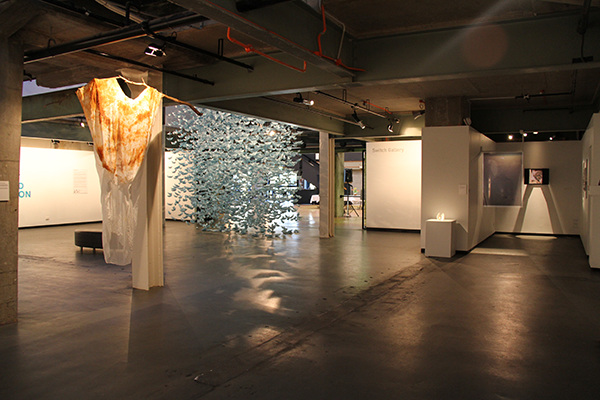
No Added Sugar is a ground-breaking visual arts exhibition emerging from the national initiative, The Australian Muslim Women’s Arts Project. Envisioned as an expansive, multi-year endeavour, this project placed community engagement and artist development at its core. Funded by the Australia Council for the Arts and the Human Rights Commission, and supported by Casula Powerhouse Arts Centre, the project reflects years of relationship-building and cultural collaboration.
Rusaila Bazlamit was commissioned as the curator, working alongside creative producer Alissar Chidiac. Together, they guided the project to its culminating moment: an exhibition that brings together eight diverse artist-led projects, anchored by the powerful words of artist Eugenia Flynn. The exhibition features the work of 18 artists from Melbourne, Sydney, and Canberra, who became part of a dynamic national network through this process.
The artists committed to an intensive, artist-led journey which included two national artist laboratories in 2011 and their own community cultural engagement projects—each supported by Casula Powerhouse Arts Centre. These creative engagements gave rise to a rich body of visual and conceptual work rooted in lived experience, self-determination, and collective resilience.
No Added Sugar received the Arts Hub People’s Choice Award in 2012 for Outstanding Contribution to the Australian Community by a group, organisation or company.
Explore More
Curatorial Statement
No added sugar came out of the process of the Australian Muslim women’s art project. the process, therefore, is the keyword that has structured the exhibition. That process has manifested through the two main themes of the exhibition: engagement and self-determination, creating an organic flow of concepts and visuals with deeper and meaningful consciousness to people and place.
The notion of sweetness is irrelevant to No Added Sugar, it is not about sweetness or bitterness for that matter. It is about rawness, these Muslim women creating art and expressing their ideas as they choose, imagining the world will listen as they want to be listened to.
The engagement process that developed between the artists and the communities they chose has influenced all involved. The participants have engaged with the artists in various creative expression activities where they have produced canvasses, clay-pots, bags, and paintings as well as sharing their stories and life experiences. This interaction has influenced and inspired the artworks that the artists have produced.
As Cultural Community Engagement is an integral aspect of this project, two spaces of the exhibition are dedicated to the work created by the communities. Marsden Gallery and Kids Gallery features some of the work that was produced in that process, acknowledging and respecting the input these people brought to this project and to the art-making process.
The other theme of this project is Self-Determination. This means that the artists had brought up issues and worked with concepts that they have chosen. They didn’t have to conform to any pre-determined conceptual or visual frameworks that are usually placed on them as Muslims, as women, as Australians, as artists or a mix of these four elements. Artists have chosen various themes, from exploring a deeper understanding of faith to challenges facing young Muslim girls, working with objects of memory and creating visible dialogues, from refugees’ experience of enforced separation to children’s tales of migration, personal stories of war and raw feelings of divorce. In a parallel dimension, poetic words by Eugenia Flynn have opened up the Indigenous connection to Home, Place, Land, and Sea.
This is not your expected Muslim Women’s Arts exhibition. This is a brave world determined by these artists honest creative imagining. As you enter Casula Powerhouse Arts Centre break away from any representational predictions you have and allow yourself to embrace the journey these artists are offering to take you through.
Media Coverage
- The Sydney Morning Herlad : Muslim Women Artists
- The Sydney Morning Herlad: Crossroads of East and West
- Finacial Review : Exhbitions | Engaging with home
- The Daily Telegraph : It’s state of the art for Muslim women
- ABC Radio National: Muslim women artists showcase their talent
- SBS News: Muslim women showcase their art in Sydney
- ABC News: Female Muslim artists explore controversial topics
- Liverpool City Champion : Look beyond, without additives
- South West Advertiser : Muslim women share artworks and writing
- Artlink : No Added Sugar: Engagement and Self-determination
- Australia Council for the Arts: No Added Sugar: Engagement & Self Determination Australian Muslim Women Artists
- Artery: The Australian Muslim Women’s Arts Project
- Right Now, Human Rights In Australia : No Added Sugar
- City News: Canberra artist in Casula exhibition of Muslim women’s art
- The Beauty of Self-Detrmination by Derek Frernandez